Production Follow-up Guide
What a Useful Steel Structure Production Update Should Show
Useful production follow-up links dated photos and records to the baseline plan, current milestone, variance, open issue, responsible party, and next action.
Buyer Guidance
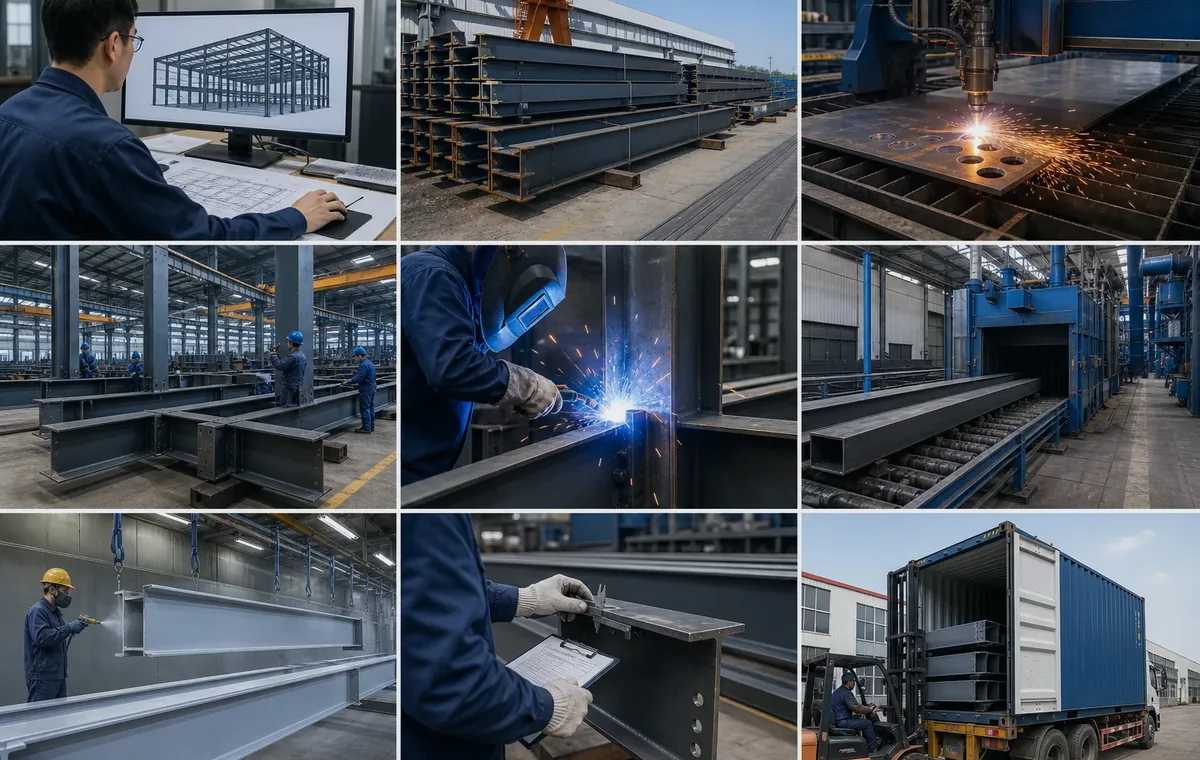
Agree the update rhythm and milestone list before order. A weekly summary can show plan versus actual status, while milestone notices cover material arrival, cutting, assembly, welding, surface treatment, inspection, packing, and loading when those records are included in the order scope.
Decision Framework
Make every update show plan, actual, variance, and action.
| Control area | What to define |
|---|---|
| Baseline | Confirmed milestone plan and dependencies |
| Actual status | Work completed, current stage, and evidence date |
| Variance | Difference from plan and stated reason |
| Open action | Decision, owner, due status, and effect if delayed |
| Next update | Expected milestone, required input, and target timing |
Buyer Checklist
Agree milestones, evidence dates, owners, and escalation rules.
- Use the same project ID on every update.
- Record the drawing revision controlling production.
- Date photos and connect them to a milestone.
- Separate completed work from work in progress.
- State buyer decisions that may affect schedule.
- Keep formal inspection records separate from progress photos.
Scope and Responsibilities
Do not treat a progress update as an inspection record.
YYN follow-up improves production visibility and supports timely issue coordination. Formal quality acceptance remains with factory quality control or the appointed inspector under the contract.
Weekly Status Structure
Make every update answer what changed and what happens next.
Begin with the approved baseline: drawing revision, released quantity, milestone plan, and dependencies. Then state the reporting cut-off date and actual progress by stage. Photos should be dated, labeled, and linked to a member group, work area, or milestone when practical. A percentage without its measurement basis should remain an estimate, not a precise completion claim.
List each variance separately with its cause, affected milestone, responsible action, required buyer decision, and revised forecast where one is available. Carry unresolved items forward until they are closed or superseded. The next update should identify the expected milestone and evidence. This structure lets the buyer distinguish normal work in progress from a decision delay, technical hold, material issue, inspection hold point, or shipment risk without treating coordination photos as formal quality acceptance.
Buyer FAQ
Practical questions about this topic
How often should production updates be issued?
The rhythm is agreed by project; a regular summary plus milestone notices is often more useful than random messages.
Are photos enough to prove quality?
Photos support production visibility, while defined inspection, test, and acceptance records provide formal quality confirmation.
What should happen when production is late?
Record the variance, cause, responsible action, recovery measure, and revised next milestone.
Related Buyer Guide
Separate Progress from Material Identity
A progress update can show when material arrived or when cutting began, but it does not establish material identity by itself. Use the steel material traceability records guide for the separate document, heat or lot, mapping, and member-mark chain.
Apply this guide to your project
Send the available documents and the decision you need to make next.
YYN will identify missing inputs, open assumptions, and the next sourcing or production-review step without replacing project engineering.