At receipt
Register the source document, visible reference, material description, quantity, source, and unresolved difference before release.
Material Traceability Guide
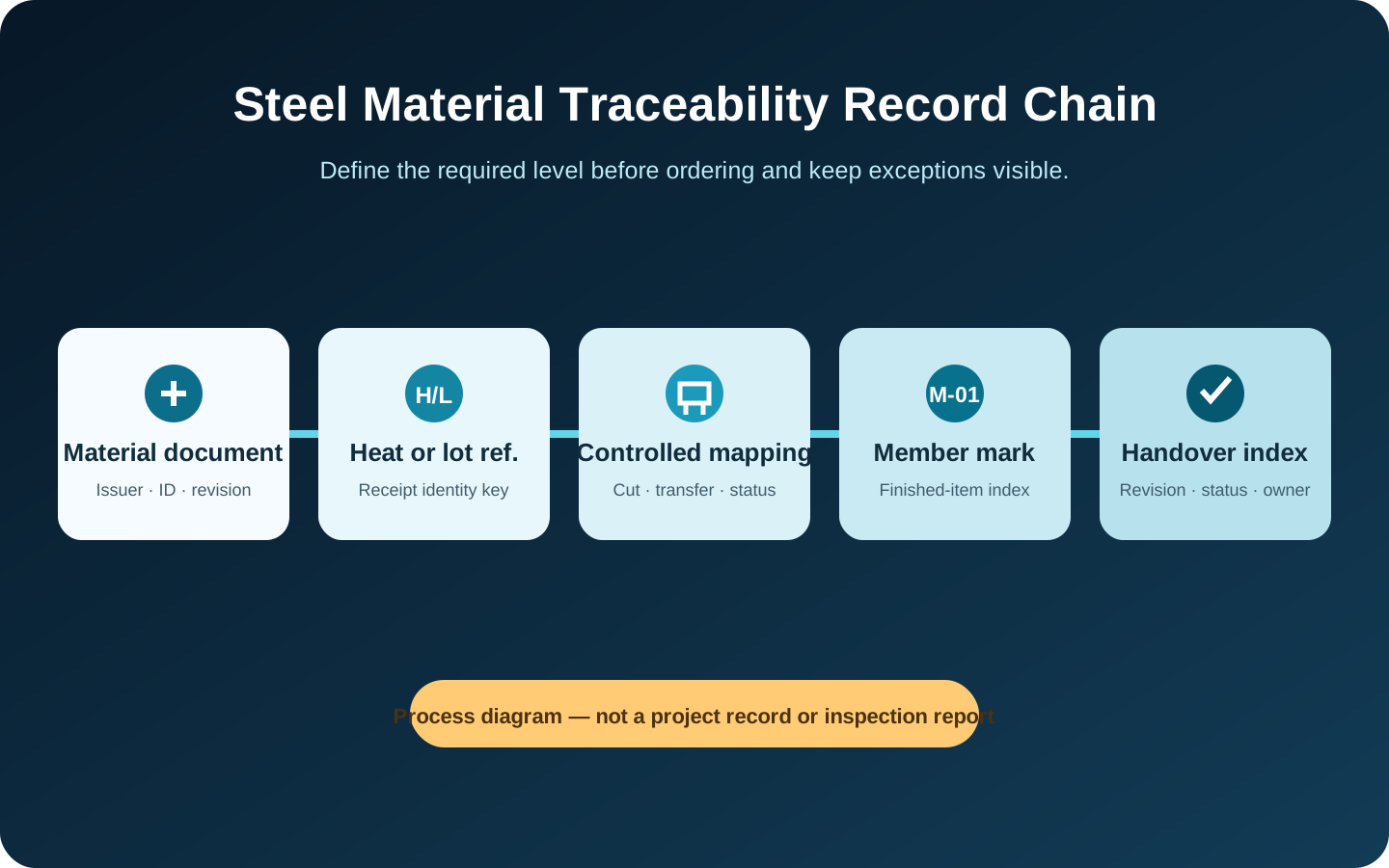
Steel material traceability records are not a pile of certificates. They are an agreed identity chain connecting the applicable material document, heat or lot reference, receipt record, controlled marking or mapping during fabrication, finished member mark, exception status, and final handover index. Buyers should define the required traceability level, covered materials, responsible parties, submission stages, and acceptance authority before material ordering.
Short Answer
A useful steel material traceability system answers five questions: which source document identifies the material, which heat or lot reference applies, how the link is preserved when material is cut or assembled, which finished member mark points back to the record, and which open exceptions remain at handover. The contract controls whether the required level is lot, piece-mark, or individual-piece traceability. An MTR, a factory QC record, a third-party inspection report, and a production photo are different records and must not be treated as substitutes.
Applicable Scope
This page is for buyers defining a material identity chain for structural steel procurement. It focuses on material documents, heat or batch references, controlled mappings, member marks, submission points, and responsibilities. It does not design the structure, select a material grade, define a welding procedure, certify local compliance, or decide whether a delivered member is acceptable.
The wider steel structure quality records guide separates progress records, factory quality-control records, material documents, and third-party reports. The project evidence package covers the broader document set, while the production follow-up guide covers plan-versus-actual progress. Use this page only for the narrower identity linkage between material and finished member records.
Buyer Inputs
These are procurement inputs, not a worldwide mandatory template. ISO 10474's official summary states that steel-product inspection-document types are supplied according to order requirements, and ISO 404 states that specific order or product-standard delivery requirements take priority over its general provisions when they differ. See the ISO 10474 official summary and ISO 404 official summary.
Traceability Level
| Level | Record objective | Buyer decision | Boundary |
|---|---|---|---|
| Lot traceability | Connect project material to the applicable set of material records | Define the lot grouping and covered material | Does not identify every finished piece separately |
| Piece-mark traceability | Connect each repeated member mark to the agreed material reference | Define which marks and material categories require mapping | Several physical pieces may share one member mark |
| Piece traceability | Connect each individual physical piece to its material reference | Confirm necessity, marking, records, handling, and cost before ordering | Must not be assumed from ordinary member numbering |
AISC's official material identification and traceability guidance distinguishes these levels and says traceability, when required, should be specified in contract documents before material ordering. That guidance applies within its structural-steel context; it is not an automatic rule for every country or contract. Review the AISC material identification and traceability guidance.
Identity Chain
This sequence is a buyer-oriented workflow assembled from the cited principles; it is not a verbatim requirement from one standard. The contract and applicable product or project rules decide the actual controls.
Record-Link Matrix
| Record field | What to capture | Link to preserve | Open-status question |
|---|---|---|---|
| Material document | Issuer, document ID, revision, product and referenced tests | Document to ordered and received material | Is the required document received and legible? |
| Heat or lot reference | The identifier shown on the applicable source record and material | Source mark to receipt entry | Does the visible reference agree with the record? |
| Receipt entry | Date, supplier, section or plate, quantity, status | Received material to source document | Are shortages, substitutions, or unclear marks open? |
| Fabrication mapping | Cutting map, controlled transfer, batch area, or approved alternative | Parent material to cut part or assembly | Was the link maintained before the parent mark disappeared? |
| Member mark | Drawing/member reference and physical identification method | Finished member to fabrication mapping | Is the mark unique enough for the required level? |
| Exception record | Missing mark, conflicting record, substitution, disposition, approver | Exception to affected material and documents | Is it open, accepted, rejected, or superseded? |
| Handover index | Final file name, revision, submission date, review status | Delivered record package to member or lot scope | Does “submitted” differ visibly from “accepted”? |
For covered hot-rolled shapes and plates in the AISC ordering guidance, an MTR generally reports information such as heat number, grade, nominal size, tensile-test data, and chemical-composition results. Product scope matters. Do not extend that list to every steel product, fastener, consumable, coating, or project. See the AISC ordering steel guidance and the ASTM A6/A6M official page.
Evidence Boundaries
| Record type | What it can support | What it cannot replace |
|---|---|---|
| Material identity chain | Agreed linkage between material documents, references, mappings, and member marks | Fabrication inspection, final acceptance, or third-party conformity decision |
| Manufacturing quality record | A defined fabrication check, test, nonconformance, or disposition | The source material document or an unbroken identity mapping |
| Third-party inspection report | Work performed by the appointed inspection party within its stated scope | The material producer's document or the fabricator's record-maintenance duty |
| Ordinary photo | Visible mark, label, package, or production condition at one time | Chemistry, mechanical properties, document authenticity, continuous linkage, or formal acceptance |
AISC 360 Chapter N separates quality control from quality assurance and places required QA responsibility in contract documents within its scope. ISO/IEC 17020 addresses competence, impartiality, and consistent operation of inspection bodies. Neither source turns an MTR, supplier statement, factory form, YYN coordination note, or ordinary photo into an independent inspection report. See the AISC 360-22 comparison document and ISO/IEC 17020 official summary.
Submission Gates
Register the source document, visible reference, material description, quantity, source, and unresolved difference before release.
Review missing or transferred identification before cutting, blasting, coating, or assembly removes a visible reference.
Review the member mapping, material index, open exceptions, and document status before the package is released.
Freeze the final revisions and distinguish submitted, reviewed, accepted, rejected, and superseded records.
These are suggested procurement gates, not universal standard deadlines. Each order should state who prepares, checks, witnesses, approves, and retains the records and what happens when an identifier or document does not agree.
Responsibility Matrix
| Role | Reasonable project responsibility | Boundary |
|---|---|---|
| Mill or material producer | Issue applicable material documents and original product identification under the order and product standard | Does not automatically maintain later member mapping |
| Service center or distributor | Transmit source documents and retain purchasing/source references | Forwarding a document is not retesting or independent certification |
| Fabricator | Check receipt and maintain the contract-required identification or traceability mapping through fabrication | Does not automatically become an independent inspector |
| Purchaser, engineer, or contract authority | Define level, scope, stages, acceptance, retention, and applicable requirements before ordering | Should not rely on an undefined request for “all certificates” |
| Factory QC | Perform and record internal checks under the fabricator's system and project requirements | Internal QC is not automatically independent third-party inspection |
| Appointed QA or third party | Inspect or witness within the appointment, competence, criteria, and contract scope | Does not issue the mill's MTR or maintain the fabricator's mapping |
| YYN | Coordinate agreed document requests, status lists, and exception communication when included in the order | Does not issue MTRs, certify traceability, replace the engineer, or act as an accredited inspection body |
Responsibility Boundary
The signed order, applicable standards, project specification, and authorized project roles control the required material documents, traceability level, inspection plan, acceptance, and retention. A submitted file is not automatically authentic, approved, or linked to delivered steel. YYN may coordinate agreed files and status communication, but ordinary follow-up does not prove a continuous material identity chain and is not material certification, engineering approval, factory QC, quality assurance, or third-party inspection.
Exception Control
Define an exception status for missing documents, illegible marks, conflicting heat or lot references, undocumented substitutions, broken cutting mappings, duplicate member marks, and superseded files. An exception record should identify the affected material or members, current status, responsible respondent, required decision, supporting file, and closure authority. Material should not be described as traceable while the required link remains unresolved.
Keep the words submitted, reviewed, accepted, rejected, and superseded distinct. This prevents a document upload from being mistaken for technical acceptance or third-party release.
Buyer Checklist
Material Traceability FAQ
They are the agreed documents and controlled links used to connect material identity information to the relevant material, fabrication mapping, member mark, and handover index at the traceability level required by the order.
No. A heat number is one possible reference key. The order also needs a controlled method that preserves or transfers the link through receipt, cutting, fabrication, member marking, exceptions, and final records.
No. AISC distinguishes lot, piece-mark, and piece traceability and says project traceability should be specified before material ordering when required. The contract and applicable project requirements determine the level.
No. An MTR reports material-related information for the covered product. Fabrication quality records address activities such as dimensions, welding, surface treatment, or other checks defined for the work.
No. Material documents, factory quality-control records, and reports from an appointed independent inspection party have different issuers, scopes, and responsibilities and should remain separately identified.
Set the stages in the order. Common buyer-defined points include material receipt, before marks are obscured, before shipment, and final handover, but the actual timing and acceptance status must follow the contract.
No. Photos can show a visible mark or condition at one moment, but they do not prove chemistry, mechanical properties, document authenticity, an unbroken controlled link, or formal acceptance.
Apply this guide to your project
YYN will identify missing inputs, open assumptions, and the next sourcing or production-review step without replacing project engineering.
 Chat with YYN SteelSteel structure sourcing & project follow-up
Scan with WhatsApp
Phone / WhatsApp+86 193 3892 7935
